Pokazywanie postów oznaczonych etykietą Bronx. Pokaż wszystkie posty

czwartek, 4 kwietnia 2019

Decade of Fire reż. Gretchen Hildebran, Vivian Vazquez (2019)


"Throughout the 1970’s, fires consumed the South Bronx. Black and Puerto Rican residents were blamed for the devastation even as they battled daily to save their neighborhoods. In DECADE OF FIRE, Bronx-born Vivian Vázquez Irizarry pursues the truth surrounding the fires – uncovering policies of racism and neglect that still shape our cities, and offering hope to communities on the brink today. 

Through a rich seam of archival and home movie footage, DECADE OF FIRE confronts the racially-charged stereotypes that dehumanized residents of the South Bronx in the 1970’s, and rationalized their abandonment by city, state and federal governments. Vázquez Irizarry, in her role as the film’s central character and co-director seeks not only healing for her community, but to redeem them from the harmful mythology spread by the media that has continued largely unchallenged to this day. She tells the story of a people who held on, worked to save their community and start anew against impossible odds. The accounts she gathers are supported by extensive research, archival footage, print and broadcast news excerpts, testimonials from retired FDNY firefighters and brass, as well as Bronx historians. 

Through exposing the history, and lifting up the stories of survivors whose deep commitment to their homes and communities saved the borough, DECADE OF FIRE offers the emergence of a new narrative for the South Bronx and places like it across the nation."

piątek, 27 lutego 2015

Kool DJ Dee Himself's Interview 2010


Jestem Kool Dee ojciec hip hop'u. Zazwyczaj nie mówię o sobie, ale dlatego dziś tutaj jestem. Wporzo, w 1971 myślę, że wtedy zajarałem się muzyką, zacząłem grać muzę z gramofonów. The Village, ja i moi znajomi chodziliśmy do The Duke, Rasberg Freeze (kluby na Brooklynie, przyp. DziuraweSample), by podziwiać tamtejszych DJ's, grali wtedy oni muzykę z radia. Wtedy nie było hip hop'u, hip hopowych płyt, nic takiego. Wiesz, muzyka, bity...

Masz dobry bit, masz początek nagrania, środek i końcówkę, środek najczęściej jest najlepszy,  stamtąd wychodziły breaki, gdyż Ci wszyscy tancerze czekali właśnie na to. R'n'B najczęściej grali, potem pokazało się Disco. W tym czasie miałem stereo od mamy, miałem gramofon, starałem się podłączyć wszystko ze sobą by zacząć miksować, bo byłem zajarany tymi kolesiami dj's.

Wiec wyprawiłem swoje przyjęcie urodzinowe, nie pamiętam ile wtedy miałem lat i zaprosiłem ludzi z Brooklynu, gdyż w sumie pochodzę z Brooklynu, chodziłem do szkoły na Brooklynie. Od I klasy wzwyż, no może nie od I klasy, ale może od III, IV klasy wzwyż, bo przybyłem z Północnej Karoliny do Harlemu na krótki czas, potem przeniosłem się na Brooklyn, więc wychowałem się na Brooklynie, mój styl to Brooklyn, co sprawiło, że byłem inny gdy przeniosłem się na Bronx.

Poza tym, swoją przygodę DJ'ską zacząłem w grupie Fantasia z Brooklynu. Byłem tam ja czyli Kool Dj Dee, Larry B i DJ Chips. My zaczęliśmy DJ'ska grupę Fantasia. Jednego dnia graliśmy w Jimmy's przy 52th St, czy 54th St., gdzieś tam na Manhattanie, grając przeciwko Plummerowi. Na co nie byliśmy przygotowani. Mieliśmy domowe głośniki, wiesz domowy sprzęt grający, a graliśmy w klubie. Plummer miał profesjonalny sprzęt, 18 calowe głośniki basowe, pełne soprany, po prostu nas zmiótł. To była najgorsza noc jaką miałem jako DJ. Wstyd. Gdy włączyliśmy muzykę i on włączył muzykę, nasz sprzęt nie był oczywiście tak głośny, ale tez nasz wzmacniacz przegrzał się i wystrzelił z gniazdka. Ale dzięki temu widziałem sprzęt Plumera, widziałem co ma, widziałem profesjonalizm i ten sprzęt który ma, to było pierwszy raz jak widziałem mikser z cross faderem. Plummer był z Brooklynu, wiec w tamtym czasie Brooklyn był znacznie przed Bronx jeśli chodzi o elektronikę i sprzet DJ's i o samych DJ's. Mieliśmy Plummer'a, Flowers'a, Maboya, Soul Brothers i ci wszyscy goście byli na Brooklynie.

Więc grałem to tu to tam, na imprezach gejowskich, i w końcu miałem swój sprzęt z pomocą mamy i zacząłem działać na własną rękę, podążając za Pete Dj Jones, to jeden z moich mentorów, i zacząłem działać samemu.


Więc miałem mikser GLI, Plummer miał mikser GLI, miał pełne głośniki bassowe. Ja dorwałem pełne głośniki bassowe, wiesz 18 calowe Cerwin Vega's, kolumny GLI. Z tym sprzętem grałem w klubach. To wtedy po raz pierwszy spotkałem Kool Herc'a. Powód dlaczego o tym teraz mowie, jest taki, że wierzę, że on miał muzykę, ale to ja miałem styl, styl miksowania. Wiec gdy zaczynałem grać, puszczać bity, miksować tak jak ja to robię, to zapoczątkowało boom, ponieważ inni ludzie, inni DJ's, ludzie w których zaiskrzyła myśl o tym by być dj'em usłyszeli mnie. Zaczęli interpretować na swój sposób to co ja robiłem i sposób w jaki to robiłem. Gdy grałem w parkach i na skwerach ludzie podchodzili i patrzyli się na mnie co robię, bałem się tego. Jak stawali w około i dziwili się jak to robię, byli zajarani, zdziwieni, oszołomieni.

Ale to przypomina mi sytuacje, gdy ja bywałem w The Duke czy Rasberg Freeze, by oglądać DJ's i czułem się tak samo zajarany. Czasami bałem się, bo wbiegali za deki by patrzeć, cholera wie... Swego czasu trzymałem 48 z tyłu w skrzynce po mleku na płyty, za ostatnią płytą, przy sprzęcie. Tak na zaś, by szybko odgarnąć płyty i złapać za klamkę. Czasami miałem wrażenie, że gram i mnie wyniosą na zewnątrz. Więc miałem okazję by użyć klamki, ale nikt po za mną i kilkoma kotami o tym nie wiedział. Ale to inna historia.

Wróćmy do muzyki... Więc gdy pierwszy raz usłyszałem Herc'a było to w Exact New Played House, nie wiem w jakim to było czasie, który rok... Siedemdziesiąty jakiś, nie pamiętam. Ale pamiętam, że poszedłem zobaczyć to co on robił. Widziałem co on robi, był to piątek, byłem tam by zobaczyć się z Troy'em (właściciel klubu) bo miałem tam grać w sobotę. Więc sprawdziłem sobie co i jak grał Herc. Jego system, głośniki, dźwięk ulegał zniekształceniu, ponieważ używał sprzętu do żywych instrumentów, używał wzmacniaczy gitarowych, głośników gitarowych, więc wiesz, jego sprzęt był zaprojektowany na potrzeby instrumentów, a nie do grania muzyki. Poza tym on nie miksował, po prostu puszczał muzykę. Wiesz puszczał kawałek z jednego gramofonu, potem zmieniał gramofon wrzucał drugi kawałek, na pierwszym zmieniał stronę i tak dalej. Nie było w tym nic z miksów ani cutów, więc tylko wrzuć płytę na talerz i puszczaj muzykę. Nie było stylu w tym co robił, ani DJ'ingu, wiesz praktycznego DJ'ingu. Nie chce mówić, że nie jest wielkim dj'em, miał swoją świtę, ponieważ to co on robił było czymś nowym, innym, więc nie oto mi chodzi, że chce mu teraz odebrać cokolwiek. Ale gdy w sobotę pojawiłem się w klubie by grać, Kool Herc zjawił się również, tak samo jak ja wpadłem na jego imprezę. Nigdy ze sobą nie gadaliśmy wtedy, ale wiedziałem, że był by mnie sprawdzić i on wiedział, że ja sprawdzałem jego, za co go szanuje.

Więc wpadł do klubu i widział co robię. Klub i imprezy były grane na zasadzie Kool Herc & The Beat's, gdy ja grałem tam imprezę, puszczałem przeróżną muzykę, R'n'B, grałem muzę która była na topie w tamtym czasie, grałem to co leciało w radio, gdyż byłem współczesnym DJ'em. Więc cokolwiek było grane w radio, miałem to na płycie, Disco... Ale ludzie często mówili, że ''a on gra disco, wiec nie jest hip hopowym dj'em". Nie! Byłem hip hopowym DJ'em ponieważ grałem hip hop i wyniosłem to na szerszą wodę. Ponieważ byłem ugruntowanym DJ'em grając na Brooklynie, Queens, Manhattanie, Jersey, Bronksie. Zabrałem hip hop wszędzie, ponieważ hip hop był w muzyce którą gram, w głębi selekcji muzycznej, nie grałem tylko hip hop całą noc. Inne rzeczy które musiałem grać miały wiele wspólnego z publiką dla której grałem, to nie była tylko publika w Bronksie.


Więc jako DJ musiałem zadowolić wszystkich, ale dla mnie miksowanie muzyki w sposób w jaki ja to robiłem, sprawił, że zamknąłem, zawarłem hip hop w tych bitach, w tej muzyce, dzięki czemu stał się atrakcyjny dla wszystkich. Wtedy inni DJ's zjawili się i wkładali w to własną kreatywność. Dużo rozmawiałem z DJ'ami, w około mnie było wielu MC's, gdy grałem w parkach i klubach. W Melgwins przy 46th St. i Park Avenue, 30th St w Super Star, co tydzień w WBLS, WWRL, KTU i wiele innych stacjiach radiowych. Wtedy byłem jednym z wiodących DJ's we wszystkich pięciu sąsiedztwach. Czasami grywałem na południu Delaware, Waszyngton, Maryland, ponieważ ludzie wynajmowali mnie by grać, więc zbierałem się i jechałem tam, zabierałem muzykę wszędzie gdzie jechałem. Wiesz ludzie mają moje kasety na Florydzie, z block parties i takich tam.

Ale wracając do rzeczy. Myślę, że beze mnie i stylu mojej muzyki Hip Hop nie zaszedł by tak daleko jak zaszedł. Ja wypromowałem to. Wiesz Kool Herc, grał w parkach i gdzieś tam, ale w Zachodnim Bronksie, Kiedyś zapytał mnie: "Kool czemu grasz muze w parkach?" - "Bo lubie grać..." - "Nie możesz robić muzy w taki sposób." - "Ja kocham muzę, będę grać cokolwiek lubię gdziekolwiek mogę, i nie muszę mieć za to płacone za każdym razem." Herc był biznesmanem. Więc gdy grałem muzę w parkach, to pomogło ludziom usłyszeć muzę jaką puszczałem i miksowałem w profesjonalny sposób. Dlatego to się tak sprzedało. Miałem MC's wtedy ze sobą, miksowałem dla nich, robiłem cuty, w tył w przód, zapętlałem dla nich bity, by trochę ponawijali. Miałem gościa tj. Love Bug Starski i Busy Bee Starski, obaj rapowali na moim systemie, miałem JJ'a Prince of Soul i jeszcze kilku, nie pamiętam, Disco King Mario był ode mnie.

W historii z Bronksu jest trochę ściemy. Wierzcie czy nie, ale na Bronx River gdy grałem po raz pierwszy, gość znany jako Afrika Bambaataa ogarnął mi zasilanie ze swojej chaty, więc tak zainteresował się DJ'ką, z resztą sam mówi, że jestem jego mentorem. Wiemy, że stoję za Bambaatą, więc jeśli ogarną ten temat Hip Hop Museum, lepiej żebym był tam, nie chce się kłócić ani dyskutować, po prostu chce powiedzieć, że jestem Dj Dee, i byłem tam jeszcze przed Hip Hopem więc jeśli chcecie znać prawdziwa historie, to lepiej znać ja od początku do końca.

Tłumaczenie: Kool Mike

Jeśli interesuje Cię ten temat, zaprasz do przeczytania wywiadu mojego autorstwa z Kool DJ Dee.

poniedziałek, 19 stycznia 2015

Kool DJ Dee Interview (2013)


DZIURAWESAMPLE:  Your Dj career started in Brooklyn Mobile DJ group Fantasia Sounds?

KOOL DJ DEE: Larry B and I grew up together, we was like brothers. I really miss him. I know he's looking down on me from heaven. Larry B rained around the seventy's to 73. Brooklyn has a lot of DJ's at that time, but Larry B rose to the top as a MC. Larry B and DJ Chips and me was the Fantasia, at the beginning of my DJ career.

DZIURAWESAMPLE: What is your point of view about person like you in NYC? I mean there is good intentions to understanding of all hip hop history aspects, also this before Bronx?

KOOL DJ DEE: Old school DJ's like myself are treated well by people our age who remember back in the day. But the younger people don't know the history and don't care about old school DJ's. If you're not current in hip-hop you're not respected.

DZIURAWESAMPLE: In Queens did a lot of Rasta. Can You remember they played some reggae music in '60 or '70?

KOOL DJ DEE: Yes they play reggae music in Brooklyn, Queens to Manhattan and Bronx. It wasn't the same reggae music they played now. The music was more about revolution, love, and jail and we all know I Shot The Sheriff. Bob Marley was the biggest reggae star at the time in the seventy's.

DZIURAWESAMPLE: In early days Disco DJ was names of DJ's?

KOOL DJ DEE: The music they play now call house music in all actuality it's disco music. Just a different name. When hip-hop came out  Disco went into the clubs, for people who still like Disco. But Disco was dead so that it come up with a different name so instead of calling it Disco they called it house music. I know if you was the DJ that play Disco music you was called a Disco DJ, even if you played funk,reggie or slow music. Mobile DJs make the difference. They played a variety of music. If you went to a club you was going to hear what the DJ played or what he specialize in.

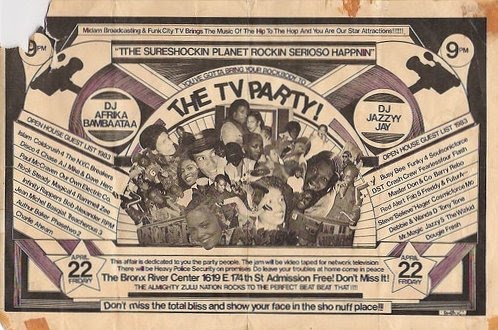
DZIURAWESAMPLE:  I found this awsome oldschool flyers. Do you remember what year it come from? Can you give me some info about oldschool DJ battled?


KOOL DJ DEE: That flies in the late seventy's early eighty's. I wasn't with Fantasia at that time. I say it happen at that time because the Patty Duke dance was out at that time. Also Eddie Cheeba and Starski was performing at that time. Listen Brooklyn has nothing to do with hip-hop at the time. Brooklyn was playing a different types of music. Hip-hop came from the Bronx, graffiti came from the Bronx. B boy dancing came from the Bronx. As you know, I lived in Brooklyn and move to the Bronx  And played a major role at the time of the birth hip-hop. So I know the truth because I lived it.

DZIURAWESAMPLE: What could you told about GM Flowers?

KOOL DJ DEE: I battled Flowers at a club in the Bronx call the Stardust Ballroom.  Flowers was 1 of my mentors, so I didn't try to embarrass myself. Flowers with a great blending DJ his mixing is always on point. I also battle Flowers at the Superstar 33 Club, I won the battle that night. Flowers was upstairs and I was downstairs and I had most of the people dancing on my floor.

You see the establishment control the music industry, they controlled Disco and everything you heard on the radio. But we the people control hip-hop. It made poor people feel empowered no longer could a black man only play basketball or be a drug dealer. He could be a DJ or a MC. Hip-hop was a movement that brought everything together and let everybody on earth to fell our pain. Hip-hop allow people to come together as One.

Imagine burn out buildings and rats running around stray dog in streets. Foul odor broken glass bottles, dark street. Feeling like you had no future. You asked me what sparked hip-hop it was rebellion  my friend. The establishment controlled Disco and all the music we heard on the radio. The music industry Disco was too happy and we wanted to express a anger and hip-hop allowed us to do that. The music industry  didn't know what to do with it they couldn't control it. We the people control the music, we said no more Disco.


Flowers, Pete DJ Jones and myself was consider to be disco DJ's. Africa Bambata and Flash and the rest of them don't consider us hip-hop DJ's. Technically I could show you on turntables but I'll try to explain. Disco DJ's played the full record. Hip-hop DJ played a part of the records. Hip-hop took just to beat part an extended it. DJ's played slow music so couples can get close. Hip-hop was beats all night. With regular DJ's if you was dancin you will wait for the good part of the record come so you can really dance hard. With hip hop that played just the good part of the records so you dance hard all night. I hope you understand.

I battled Bambata in Bronx river youth center. Bam present me with on award for being  Bronx number 1 DJ. I'm not sure but I think was in 1976.

I battle Grandmaster Flash at the Savoy Manor, and I won the battle. I also battle Flash at Auborn ballroom. But what was significant that night, is that we perform on the same stage that Malcolm X was shot on. That was a very special night.

DZIURAWESAMPLE: Do you remember what folks was palyed music in Duke and Rassberg Freeze?

KOOL DJ DEE: They had a lot of mobile DJs playing there Pete DJ Jones, Flowers Moboya, Rip and Cliff (Rip was Pete DJ Jones friend and inspired him to be a DJ; assigned DZIURAWESAMPLE), Soul Brothers. That's who I remember playing at the Raspberry Freeze.

DZIURAWESAMPLE: Your first radio took from your mother. Do you remember what type of radio it was?

KOOL DJ DEE: It was a Hi Fi set with tubes. It was made in Germany. It has bass and treble. I learned a lot when I took it apart.


DZIURAWESAMPLE: In the beginning Brooklyn Dj played R&B. Do you remember in what year Disco music push off R&B?

KOOL DJ DEE: I think it was 1972 to 73 when Donna Summers came out disco blew up then studio 54 open up also clubs like the Garage.

DZIURAWESAMPLE: When you raised in North Carolina, did you see Dj plays in turntable or from tapes?

KOOL DJ DEE: I left North Carolina when I was 7 years old. I was raised in New York Harlem in Brooklyn then Bronx. My mother gave a lot of parties. I use to stay up at night, listening to the people party and the music. I was fascinated how people like to dance and how happy they was

DZIURAWESAMPLE: Your mentor was Pete Jones. What he was learned you?

KOOL DJ DEE: What did I learn from Pete DJ Jones? Pete teach to me about programming. Programming the a play list. He taught me about the business and of DJing. And to have fun while I'm doing it.

DZIURAWESAMPLE: In what parks, clubs, spots you was played in BX?

KOOL DJ DEE: Well I played Rosedale Park, Bronxdale, Soundview, Bronx River Junior High School 123 Valley park. Just to name a few so many. I can't remember do clubs was  Executive Playhouse, Stardust ballroom, Sovor Manor and a lot of the after hour spots. Again can't remember everything.

Kool DJ Dee at Small Paradise in Harlem in 1975.

DZIURAWESAMPLE: After Bambaataa help you in your first party in Bronx River Center, he speak with you in the same night?

KOOL DJ DEE: I don't know what you mean by Bam helping me, you mean the day. I played in Bronx river circle and Bam gave me electricity?? Yes we did talk that day I knew Bam he was  my War Council  while I was in the Blacks Spades.

DZIURAWESAMPLE: In your opinion Bboys dance was created in Herc first parties?

KOOL DJ DEE: I don't know if it happened at Herc parties first but it was from the Bronx

DZIURAWESAMPLE: Did you ever met Ghetto Brothers? They probably first who conclude hip hop philosophy, negative to positive. It is strange for me, that they are not enough mention contributed with hip hop.

KOOL DJ DEE: The Ghetto Brothers that I know was a street gang in the Bronx in the seventy's. I know the only as a street gang, I never knew they had a band.

DZIURAWESAMPLE: Do you first heard about music band Ghetto Brothers from my message? Please express your opinion about GB contribution in hiphop.

KOOL DJ DEE: Yes I first heard about the Ghettos  Brothers from you as a music group. I only knew them as gang members. With all due respect to the Ghetto Brothers, I never played in the music from the album and I don't see the connection.

DZIURAWESAMPLE: When you was with Fantasia did you play solo in Bx?

KOOL DJ DEE: When I was with Fantasia I had no equipment. DJ Chips and I had creative differences. So I left Fantasia and went out on my own. I worked and saved my money and got my equipment. That was a start of Kool DJ Dee in the Bronx in 1973.

DZIURAWESAMPLE: In what exacly part of Bx you lived?

KOOL DJ DEE: The part of the Bronx I live was called Soundview.

DZIURAWESAMPLE: Did you ever be in Disco Fever club?

KOOL DJ DEE: Yes I use to go to Disco Fever to relax I never performed there it was a lot of DJ's there and we'd like to drink and talk.

DZIURAWESAMPLE: In what year first time played in BX River Center? 

KOOL DJ DEE: The first time I played in Bronx River was 1974.

DZIURAWESAMPLE: You are one of very first Zulu members, yes? Could you decribe how was as a change from Black Spades to UZN? 

KOOL DJ DEE: I was in the Black Spades the First Division First Chapter. And I was the president. BAM was my war Counselor. I started playing music And the gang banging alone. Then BAM took my division and made it into Zulu Nation

DZIURAWESAMPLE: Could you give more information about your music partner - Tyrone?

KOOL DJ DEE: Tyrone is my brother from the same mother. He begin the Djing with me in 1974. He had been credit for doing for stretching. Other people said it was Theodore.

DZIURAWESAMPLE: What was type your first equipment? (This GLI Mixer which pix you sent to me??

KOOL DJ DEE: Yes the pic of the GL I was my first mixer, also I got some of the KD crew looking for mixtapes of me playing in the parks or any clubs.


DZIURAWESAMPLE:  What was the difference between you and Dj Chips? It was about music style, he was leader, and he did not accept your ideas?

KOOL DJ DEE: Yes it was Chips equipment and we had different tastes in music Larry B was trying to get us to combine the 2 music types together. But it didn't work. I love playing music and I didn't want to be restricted in what I wanted to play so I left.

DZIURAWESAMPLE: Tyrone, your brother. In what year he was invented scratch technics? Did he was play with other cats?

KOOL DJ DEE: 1975 or 76. It happen in Prince George Hotel it actually was a mistake he pitched up the record, it slipped out of his hand he pulled back, let it go, pull the back.

DZIURAWESAMPLE: In this gigs in Prince George Hotel, what it was? Only your performance or another group was there?

KOOL DJ DEE: Yes there were other DJ's playing on different floors at the Prince George Hotel I'm not too sure but I believe it was Flowers and Pete.

DZIURAWESAMPLE: Do you ever recorded any music in official? I mean vinyl 12" or something like that?

KOOL DJ DEE:  I never recorded any vinyl music.

DZIURAWESAMPLE: In what year did you first heard about Zulu Nation? When did you first saw UZN emblem?

KOOL DJ DEE:  Heard about the Zulu Nation about 78.

DZIURAWESAMPLE:  Rap music, style of rapping was created about 1978. Are you agree with this?

KOOL DJ DEE:  Rap was out for a long time it was rapping on the mic from 71 to7 7 that was talking on the mic. Then out to 77 they started chanting on the mic and rhyming. So yes I agree with that.


DZIURAWESAMPLE: Could you decribe style of MC'ing and Dj'ing your brother's, Tyrone?

KOOL DJ DEE: The style of music me and my brother played is the foundation for all the DJ's you here today. We mix records so you couldn't hear the mix and we also cut record on beat. I can explain it but as soon as I find someone with a mixtape of me you can hear it.

DZIURAWESAMPLE: Did you ever have manager?

KOOL DJ DEE: Disco King Marrio use to be my manager for a little while.

DZIURAWESAMPLE: Did you write your names of walls?

KOOL DJ DEE: Yes I did write my name on the subway lot in the seventy's.

DZIURAWESAMPLE: Bronx back then was very gangs place, people lived in smalls place. But what are you refer to that - you was in 1st division of Black Spades and do not know about Ghetto Brothers music. So people in 70 in Bx lived day by day at his small place ...

KOOL DJ DEE: Yes I was in the First Division First Chapter I was the President of that Black Spade Division. The Ghetto brothers what's a rival gang I was friends with some of the Ghetto brothers we went to school together at Stevenson H.S. I never heard their music, and I didn't know that they had a music group. Yes the Bronx is a small place but all cultures was separated at that time.

DZIURAWESAMPLE: Hip hop music for me always was fusion of funk, sould and all black music but rock too. And you was do it in this way. That fusion with breaks. Please write to me about your first partie in Nobel Park.

KOOL DJ DEE: At that time I lived at elder Avenue it's a mile and a half away from Noble Park. A bunch of Spades carrie my speakers down to Noble Park, It was a Sunday. I setup and hooked up to the electric panel in the street light. There was electricity in the air it was exciting, people didn't know what was going on. when I started playing it was a handful of people there. But you could hear my music from miles away and people follow to sound to the park. Before I knew it, there was a thousands of people there. You had families there and drug dealers, kids running around, that day there was no crime in the area. Kids around the set watching me people treat me like a king I guess you could say I was a Ghetto Star.


DZIURAWESAMPLE: You and Tyrone was a crew? You have a name?

KOOL DJ DEE: I had a crew called the KD Crew there was Al Gee, CEE B, Willie Will, Fever Dee, Lee, Norman, ST. Most of them are not alive now.

DZIURAWESAMPLE: What was your favorites music group or singles, that you was played. Did you have your playlist?

KOOL DJ DEE:  Mexican by First Base, Apache, Scorpio, Sex Machine by James Brown Love Is The Messages that was some of my favorites.

DZIURAWESAMPLE: In Nobel Park, who played there too, Disco King Mario or anothers pioneer?

KOOL DJ DEE:  Oh yeah Lovebug Starski was there Busy Bee Starsky came by next DJ Hollywood was there, BAM. I was before everyone else other than Herc. I introduce Disco King Marrio to music, he was there to help carry my equipment and he was with me for a couple years until he got his owns system. Oh yeah Lovebug Starski was there Busy Bee Starsky came by DJ Tex, DJ Hollywood was there BAM. All the Pioneer names I mention was not DJ ing at that point.

DZIURAWESAMPLE: Ok, they did not rocked in high level like you, so could you confirm this, You was the very first Dj in Bx who was real Dj? Could you mention about others early 70th Dj?

KOOL DJ DEE: When I started playing in the Bronx there were only Pete DJ Jones and Cool Herc. Then Grandmaster Flash come along later. Busy Bee was my MC for a while. No Dj Tex and Busy Bee wasn't homies. They knew each other through  the music. There was a lot of DJ's in Brooklyn at that time but in the Bronx other than Pete DJ Jones, Yes I was the first real DJ to play outside Noble Park

DZIURAWESAMPLE: You was played in few spots, but what was your main spot?

KOOL DJ DEE: The club I played in the most was Nell Gwens located in Manhattan at 42nd Street and Park Avenue. It's no longer there now.

DZIURAWESAMPLE: Dee, you was introdused Disco King Mario into music, please describe this happen. Whose you intodused into DJ too (I know about Bam)?

KOOL DJ DEE: I knew Marrio from the Black Spades. He heard me play at a block party on
Wheeler Avenue. He was so amazed when you saw it . He wants to know how everything works. So from that point on Marrio was around me coming to my house hanging out with me. At first he was my manager finding me places to play. Then he started talking on the microphone. He came up with the name Disco King Marrio he started saying Chuck Chuck City Disco King Marrio while on my system. It was Mario idea for me to play and Noble Park and Bronxdale.

DZIURAWESAMPLE: Did you ever had a music pupil?

KOOL DJ DEE: Yes I have a lot of pupils but it wasn't like I was teaching each. First they learned like I learn watch and learn. Their go out buy 2 turntables and a mixer and the next thing you know  DJ's. That's how works in the beginning.

DZIURAWESAMPLE:  In interview on thafoundation page, GWT mention your person …

KOOL DJ DEE: I see this spell my name with, its amazing how this djs don't like to talk about me. What  Theodore fail to mention in that interview, he was using my system while he was battling flash at Monroe High School.

DZIURAWESAMPLE: Do you remember guy named Dj Smokey?

KOOL DJ DEE: I don't know that guy DJ Smokey.


DZIURAWESAMPLE: GWT do not mention about this battle, Could you develop this subject? You played there first?

KOOL DJ DEE: I believe that Marrio was supposed to play that night but something happened to his system. So I let him use my system. Monroe High School was packed, At that time Theodore didn't have a system. He went around to DJ to DJ playing music with arm full of Records. I had a loud and clear system, So when Theodore played sur sur per per.... sperm. That took skill, But he did it on my system That show was history. And by the way Flash did his thing too.

DZIURAWESAMPLE: Flash used your system too? That was first time when Theodore played 'sur sur per per sperm'

KOOL DJ DEE: No all the DJ's played that record  super sperm, But it was the first time DJ broke down the syllables in the mix.

DZIURAWESAMPLE: Do you remember in what year he used your system? 77,78?

KOOL DJ DEE: I'm not sure but I would say 78.

DZIURAWESAMPLE: Ecstasy Garage, did you played ther often? 

KOOL DJ DEE:  No I might of played there 1 or 2. Times. Some of those flies At the Garage I wasn't there.


DZIURAWESAMPLE: What are you thinking about this oll hip hop movie? (Wild Style, Beat Street)

KOOL DJ DEE: To me have been living In the seventies eighties nineties. Those movies not the truth to me. There's always something wrong The scenery The way they dress And the sling they use And even the way they dress.

DZIURAWESAMPLE: Did you use Amen Break in your playlist? 

KOOL DJ DEE:No I don't believe I ever used any of their beats


DZIURAWESAMPLE: Did you be in Hoe Avenue in 1971 ?

KOOL DJ DEE: Yes I was a round Hoe Avenue in 1971. In the beginning it was a little uncertain that the meeting was even going to take place. at the time a lot of people was getting hurt or killed and was being blamed on different gangs which started a fight with different rival gangs. the crimes that was being committed wasn't done by the gangs, we believe it was the 41st pct. Fort Apache. It was at the boys club on Hoe Avenue and 174 Street. after the meeting was over we all felt relieved. no more war for a while we could walk around with our colors on in different territories.

DZIURAWESAMPLE: Did you discussion with Bam about yours impact in hip hop?

KOOL DJ DEE: BAM knows my own impact on hip hop but like I told you before that's politics. I do believe there was a conspiracy to not say anything about me and promote other people. But what happens in the dark always comes out in the light.


Kool DJ Dee & DJ Chips Reunion at 26.03.2013

Be sure to check out:

DJ Chips's website@

czwartek, 21 listopada 2013

8 Million Stories: Dj Rockin' Rob and the story of "Mean Machine Crew"


Dj Rockin' Rob, z oldschoolowej ekipy Mean Machine Crew, opowiada o latach spędzonych na osiedlu, zawiązaniu się ekipy MMC, oraz wspólnych występach w lokalach z początkiem lat 80.  Południowy Bronx pod koniec lat 70., miał swoich reprezentantów, jeżeli chodzi o pierwsze ekipy stricte hiphopowe... Oto opowieść o jednej z nich...

wtorek, 3 września 2013

The Life of Junkie Junior reż. Jon Alpert (1987)


Dokument dostępny na platformie YouTube, kliknij poniższy (nieaktywny) filmik i obejrzyj na platformie.

"A five-year portrait of Junior Rios' descent into the black hole of drug addiction which will ultimately cost him everything." - IMDb

poniedziałek, 17 września 2012

Vivian Maier - Born In The Bronx Photographer


@ vivianmaier.com

Vivian Maier urodziła się pod koniec lat 20 w Bronksie. Dzieciństwo i młodość, spędziła w Nowym Jorku i we Francji. Przez całe swoje życie podróżowała po świecie, jako fotograf amator robiąc zdjęcia na ulicach wielkich metropolii.

wtorek, 19 czerwca 2012

8 Million Stories: Joseph Mpa of Black Panthers / Cold Crush Brothers


Kilka słów od Joseph'a Mpa, aktywnego członka Czarnych Panter oraz pierwszego managera ekipy Cold Crush Brothers.

"Joseph Mpa was in the 7th grade when he was given a new perspective on life. Through extracurricular reading he became aware of the Black Panthers and the struggle to obtain racial equality. Once enlightened Joseph joined the local Black Panthers chapter right around the corner from where he lived with his parents in the South Bronx. There he received political education and also helped in a breakfast program for kids every morning before attending his high school. 

Through a partly illegal program called Cointelpro, the FBI infiltrated the Black Panthers, and along with imprisonment of its leaders and a shift in attitude towards political activism in the American society this would eventually lead to their demise. Change doesn’t happen overnight but the Black Panthers were successful in setting a political agenda that was unheard of at the time. After some soul searching Joseph got involved with a community organization named United Bronx Parents under the leadership of Dr. Evelina Antonetty. That was in mid-70 and since then Joseph has kept doing his part to improve the living conditions in the South Bronx through different types of community work. 

Through a class Joseph taught at United Bronx Parents he came into contact with the Cold Crush Brothers and eventually became their first manager. This was at a time before hardly anybody could make a living from rappin’ on the mic especially not when the money coming in was split between Joseph and the six members of the group, Easy A.D.,Dj Tony Tone, Almighty Kay Gee, DJ Charlie Chase, JDL and Grandmaster Caz. 

Despite the success of the Brothers, musical styles where changing fast, and Joseph decided it was time to focus on married life and quit his job with the group. Even though the Brothers never really achieved the success as recording artists matching some of their peers, their legacy lives on through taped performances from the height of their career. Luckily for future generations, the Cold Crush Brothers also had their own photographer, Joe Conzo Jr., with an all access pass to document their doings. 

Besides the Cold Crush Brothers, Joseph Mpa also worked with Sugar Hill’s and Honey Hush Records’ Mean Machine, usually credited for being the first bilingual Hip Hop group whom he also met at United Bronx Parents."

sobota, 12 maja 2012

8 Million Stories: Jerry Reaper of The Reapers


Słów kilka od Jerry'ego Reapera. Opowiada m.in., jak wyglądała struktura społeczna Bronx River Houses, oraz  wspomina inicjację gdy wstępował do grupy.

"Jerry Reaper was born and raised in Bronx River Houses. The 9 brick buildings that makes up the government housing project has a long history battling gang problems; in the 1970’s one of the more notable gangs was the Reapers. Looking up to his older brother and dedicated Reapers member, Jerry ended up being initiated into the Junior Reapers, the subdivision for youngsters, much to their parents’ dismay. 

The Reapers had its Main Division on Daly Avenue and 180th Street, which is also the site of its 1963 founding. The gangs’ membership peaked in the early 70’s with 10 divisions spread out across the borough. The 1st Division ‘turfed’ Bronx River Houses but, with no shortage of kids looking for a way to prove themselves as men, the concrete grounds were shared with other gangs like the Black Spades, Seven Immortals, Supreme Enchanters, and Satan’s Angels among others. 

Before Baron, Jerry’s older brother, joined the Reapers he had his own ‘organization’ named P.O.W.E.R. In true 1960’s rebellious fashion P.O.W.E.R. was about People’s Organization War Energetic Revolutionaries. However, that didn’t last and before long its’ former members were engrossed by the Reapers. 

Once Jerry began flying the gang colours on the back of his denim jacket, the Reapers’ membership was dwindling and towards the latter part of 1976 the gang had more or less slipped back into the darkness. Many of the older members had left, some joined the armed forces, and the Juniors were becoming more interested in Disco music and what would later become known as Hip Hop. That included Jerry. 

One of the key elements in making Hip Hop a soul sonic force to be reckoned with was a DJ living on the first floor of building 1595 in Bronx River Houses. 

Before joining with the Black Spades 10th Division, the cosmonautic Afrika Bambaataa, was a member of the Savage Pirates, a rather small and childish gang. For a time in the early 1970’s the Spades were among the biggest gangs in New York City. 

Once the gangs of that era began to fade out, the Black Spades in Bronx River Houses became the Organization and later the Zulu Nation. The Universal Zulu Nation still exists today and has played an important role in spreading Hip Hop around the planet. It all happened under Bambaataa’s leadership. 

There’s of course much more to Bronx River Houses. In 1962 the Chiffons released their all-time classic “He’s So Fine” on Laurie Records. The female group was made up of Bronx River residents. Lola Love, a multi-talented actress who was featured in both “Up The Down Staircase“ and “The Landlord” before she left junior high school, and who performed with the Godfather of Soul Mr. James Brown for 10 years, is also a proud Bronx River Houses native. 

Today Jerry still lives in the Bronx. He has for the last couple of years been responsible for arranging the Reapers summer cookout, bringing together x-members and former enemies alike."

wtorek, 13 marca 2012

8 Million Stories: Luis Lugo from Royal Javelins


Kilka słów od Luis'a Lugo, członka gangu Royal Javelines, który opowiada jak rzecz miała się latach 60. i 70. w Bronksie.


"Luis Lugo is one of the original members of The Royal Javelins, a Bronx gang that dates back to the late 1960’s. It was in the early 70’s that the Javelins began to make headlines. They had articles written about them and were featured in documentaries as one example of the deteriorating situation that gave the Bronx its’ bad reputation. Lugo brings us to the location of the Javelins old club house in the area close to the Madison Square Boys & Girls Club on Hoe Avenue which was the site of the peace meeting between Bronx gangs in 1971. It was at the Boys Club that Lugo got a part time job in 1974 through their gang outreach program, which he says changed his life. Today, Lugo still holds his part time job at the Boys Club working with the Bronx youth of today. His full time job, well, some would say that it is somewhat unorthordox considering his past."

niedziela, 17 kwietnia 2011

Born In The Bronx - Hip Hop Map Of The Bronx by Tony Tone & Joe Conzo

Pozycje ułożone są numerycznie od góry do dołu... Zatem "The Alps Hotel..." odpowiada pozycji 1, a "Monroe High School..." odpowiada pozycji 30... Enjoy! ''12 South Bronx Movement - You've Got The Power To Get High On Yourself (1983) Hail The Bronx! Peace!

sobota, 19 marca 2011

niedziela, 28 listopada 2010

Long Time Ago - Gangs & People from The Bronx


"You can't separate peace from freedom because no one can be at peace unless he has his freedom..." - Malcolm X